

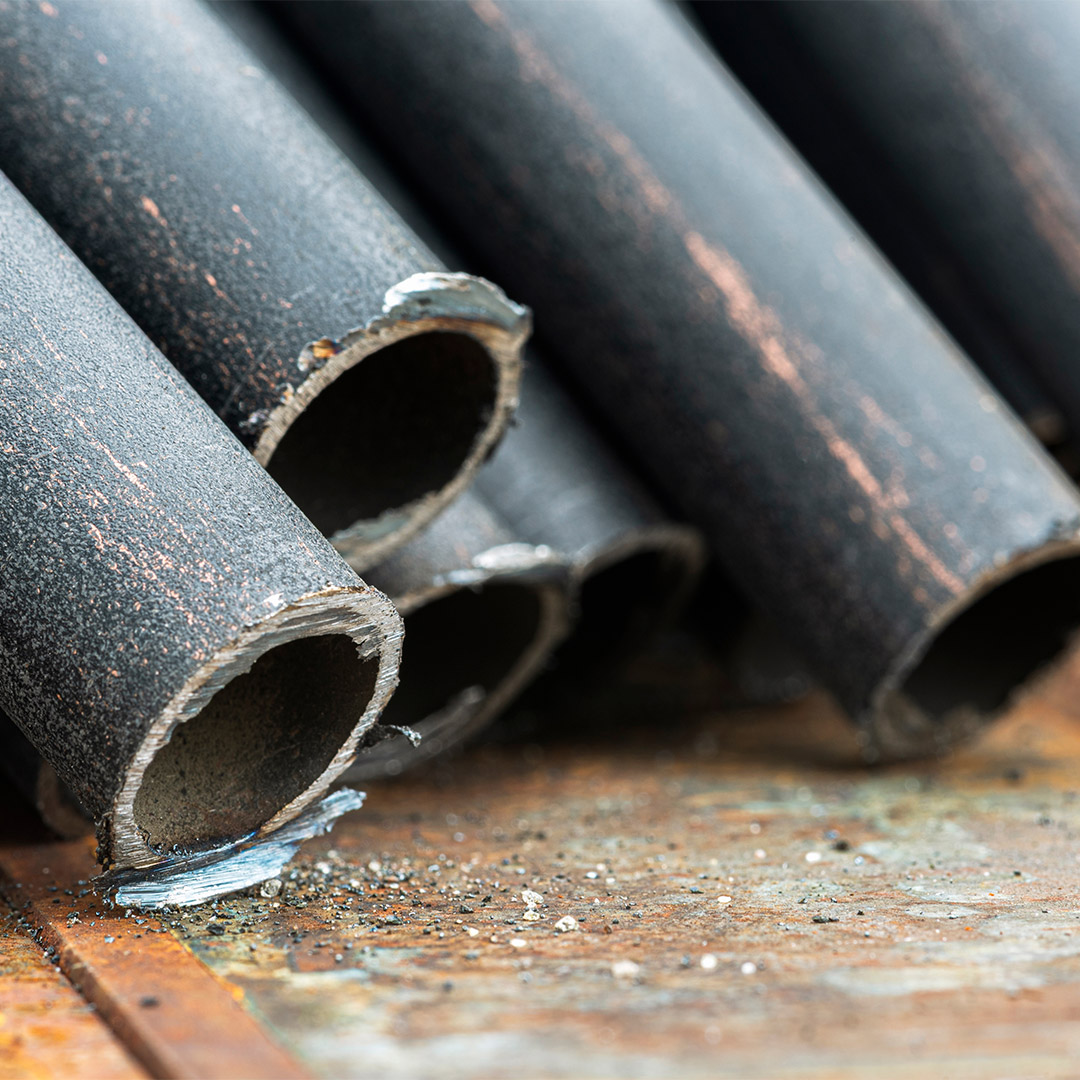
304 vs 316 Stainless Steel Recycling
When it comes to stainless steel recycling, two of the most common grades you’ll come across are 304 and 316 stainless steel. Here we pit them against each other – 304 vs 316 stainless steel – to help you understand how they are used, graded and valued.
For tradespeople, fabricators and anyone selling scrap metal, understanding the difference can help you walk away with the best price possible.
What is 304 Stainless Steel?
304 stainless steel (SS 304) is one of the most common grades of stainless steel, used for everything – from small, day-to-day items like cutlery, to heavy-duty machinery. Made up of 18% chromium and 8% nickel, it can also be referred to as 18-8 steel. Its properties include:
- High melting point
- High corrosion-resistance
- Good malleability
What Does Scrap 304 Stainless Steel Look Like?
Scrap SS 304 is normally a dull-to-shiny silver scrap metal which is often found in sheet metal, pipe, kitchen/food equipment and fasteners.
What is 316 Stainless Steel?
316 stainless steel is similar to SS 304, but it’s stronger at higher temperatures and has more molybdenum in it, which gives the alloy better corrosion resistance. Originally used for paper mills, SS 316 is now used more commercially, across the construction, manufacturing and medical industries. Its properties include:
- High weldability and machinability
- Good corrosion resistance
- Excellent pitting resistance
- Good resistance to most chemicals
What Does Scrap 316 Stainless Steel Look Like?
Scrap SS 316 is typically a dull, matte-grey or slightly silvery-white metal, often seen in industrial pipes, marine hardware or tanks.
Should 304 and 316 Stainless Steel be Recycled Separately?
Yes, to guarantee proper recycling and reuse, 304 and 316 stainless steel should be recycled separately. This will also conserve the metals’ respective integrity as recycled material.
How do Stainless Steel Grades Affect Prices?
The higher the grade, the higher the price. Grades of stainless steel, like all scrap metals, are standardised classifications used to determine the purity and cleanliness of the material, directly affecting its market value.
Scrap Metal Prices: 304 vs 316 Stainless Steel
316 stainless steel is, on average, 20-30% more expensive than 304 – mostly due to its higher chromium and nickel content, as well as its superior corrosion resistance.
Generally, clean, unalloyed stainless steel is always more valuable than contaminated or mixed stainless steel.
Weigh-It-In with Kas for the Best Scrap Metal Prices
By basing our pricing strategy on the global benchmark, the London Metal Exchange (LME), our scrap metal merchants can guarantee you the best, most competitive prices in the area – no matter the type or quantity of scrap metal.
Visit our local scrap yard at M46 0RY for…
- The very best scrap metal prices, always based on the LME.
- Speedy turnarounds for busy tradespeople.
- Same-day payments before 4pm.
Make sure you follow us on Facebook, Instagram and X to keep up to date with KAS & the latest industry news.
Serving All Areas of the North West
From Bolton and Chorley to Wigan and Preston, our experienced scrap metal merchants are based in Atherton – making us well-positioned to serve Lancashire and Greater Manchester, as well as their surrounding areas. Visit us at M46 0RY today!
Other Areas Covered:
Tags: Chromium Recycling, Cobalt Recycling, scrap metal recycling, Scrap Metal Recycling For Trade, scrap metals, Tungsten Recycling

Recent
Scrap Metal Roofing Materials: Which Are the Most Valuable?
Categories: Benefits of Scrap Metal Recycling, Ferrous Scrap Metal, Local Scrap Metal Recycling, Metal Scrap Yard, Non-Ferrous Scrap Metal, Scrap Aluminium Recycling, Scrap Copper Recycling, Scrap Lead Recycling, Scrap Metal Merchants, Scrap Metal Prices, Scrap Metal Recycling News, Scrap Steel Recycling, Trade Metal Recycling