

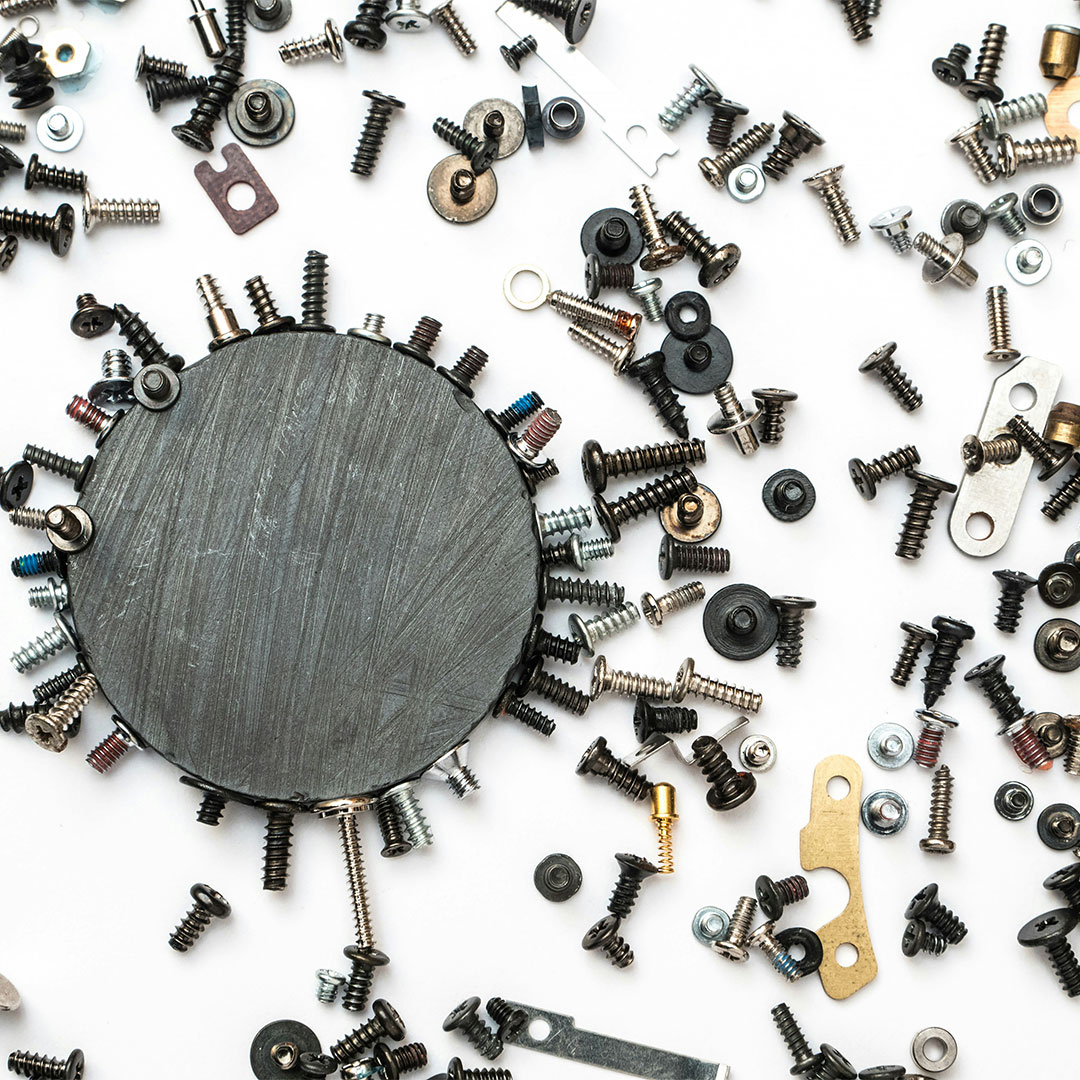
Magnetic metals are all around us – ranging from something as small as a fridge magnet, to something as big as a washing machine. But, which specific metals are magnetic and why is it so important to recycle them?
What Are Some Examples of Magnetic Metals?
Magnetic metals are all ferrous metals, which means they contain a significant amount of iron within their chemical composition. Examples of this include:
- Mild steel
- Carbon steel
- Stainless steel
- Cast iron
- Wrought iron
Scrap Steel
The world’s most important construction and manufacturing material, steel can be found in every aspect of our lives, including but not limited to:
- Cutlery
- Gutters – e.g. galvanised steel
- Pipes – used in construction, oil and gas, wastewater systems and manufacturing)
- Roofing – e.g. corrugated steel or galvanised steel roofing sheets
Because steel is an alloy of iron and carbon, recycling the metal uses significantly less energy than mining new ores from scratch and refining them, helping to reduce the harmful pollutants associated with steel production.
Scrap Iron
A versatile metal that is always in high demand, iron is used across many domestic and commercial applications, including but not limited to:
- Automotive parts
- Construction materials
- Fencing
- Plumbing valves – e.g. cast iron ball valves or control valves
Without iron, we wouldn’t be able to produce steel. Recycling one tonne of steel saves 1.5 tonnes of iron ore – the primary source of the world’s iron and steel industries. Scrap iron recycling also reduces the need for mining new ores and refining metals, minimising air pollution and helping to preserve natural resources.
Why is it Important to Recycle Magnetic Metals?
Aside from the important environmental reasons we’ve mentioned above, recycling magnetic metals is also becoming more and more essential for manufacturing the items that are crucial for our health and day-to-day living. This includes, but is not limited to:
- Credit/debit cards
- MRI machines
- Electronic cars, especially hybrid self-charging cars (which also have a very positive impact on the environment)
How Does Recycling Magnetic Metals Work?
Firstly, our scrap metal merchants will use the latest in metal analysis systems to weigh your magnetic metals and assess how much they are worth.
Scrap metal prices depend on the type, quality, quantity and grade of your scrap, as well as the current supply and demand at the point of trading. Allowing you to walk away from our scrap metal yard with the best price possible every time, our pricing strategy is based on the London Metal Exchange (LME) – the world centre for industrial metal hedging, trading and pricing.
To give you the space to unload your scrap metal safely and easily, we have a designated parking area away from all other vehicles on-site. Additionally, if you’d like to watch your magnetic metals being weighed, we also have a safe and tidy waiting area for you.
Once your scrap has been valued, we’ll give you a compliant weigh-in ticket with a detailed summary of how we decided on the price. If you’re happy to proceed, our scrap metal buyers will offer you three different flexible and prompt payment options, including cheques, bank transfers and our exclusive pre-paid card method.
Recycle Your Magnetic Metals with KAS
If you have any ferrous scrap lying around, or you’re a tradesperson who comes across it every day, why not visit our recycling centre to do your bit for the environment and turn your unwanted metal into profit? If you drop it off before 4pm, we’ll guarantee you a same-day payment!
Give us a call, email or visit our local scrap metal yard today. We are based in Atherton meaning we can also service the following areas: Astley, Preston, Leigh, Wigan, Tyldesley, Bolton, Worsley, Lancashire, Chorley, Westhoughton and Salford. Don’t forget to follow us on Facebook, Instagram and Twitter to keep up to date with the latest company updates and industry news.
