

Non-Ferrous Scrap: How to Identify Hidden Gems
If you work in a trade, chances are you’re handling valuable scrap metals every day – without even realising it. Metal offcuts, old fittings, stripped wire and aged pipework might look like waste, but a trip to the local scrap yard could turn it into a profit! Non-ferrous scrap metals are often the best hidden gems, as these will fetch you the highest price. In this guide, we’ll break down what counts as non-ferrous scrap, how to spot hidden gems in trade materials and how valuable they really are.
What counts as non-ferrous scrap?
Spotting hidden gems in trade materials
As a tradesperson, you’d be surprised how many hidden non-ferrous gems pass you by on a day-to-day basis. From copper wiring stripped out during electrical work, to aluminium offcuts or lead flashing from roofing jobs – these valuable finds are all worth keeping to one side:
- Aluminium: Sheet, cables, gutters/pipes, window/door frames, automotive parts, roofing sheets, etc.
- Brass: Taps, pipes, vehicle parts, hardware, etc.
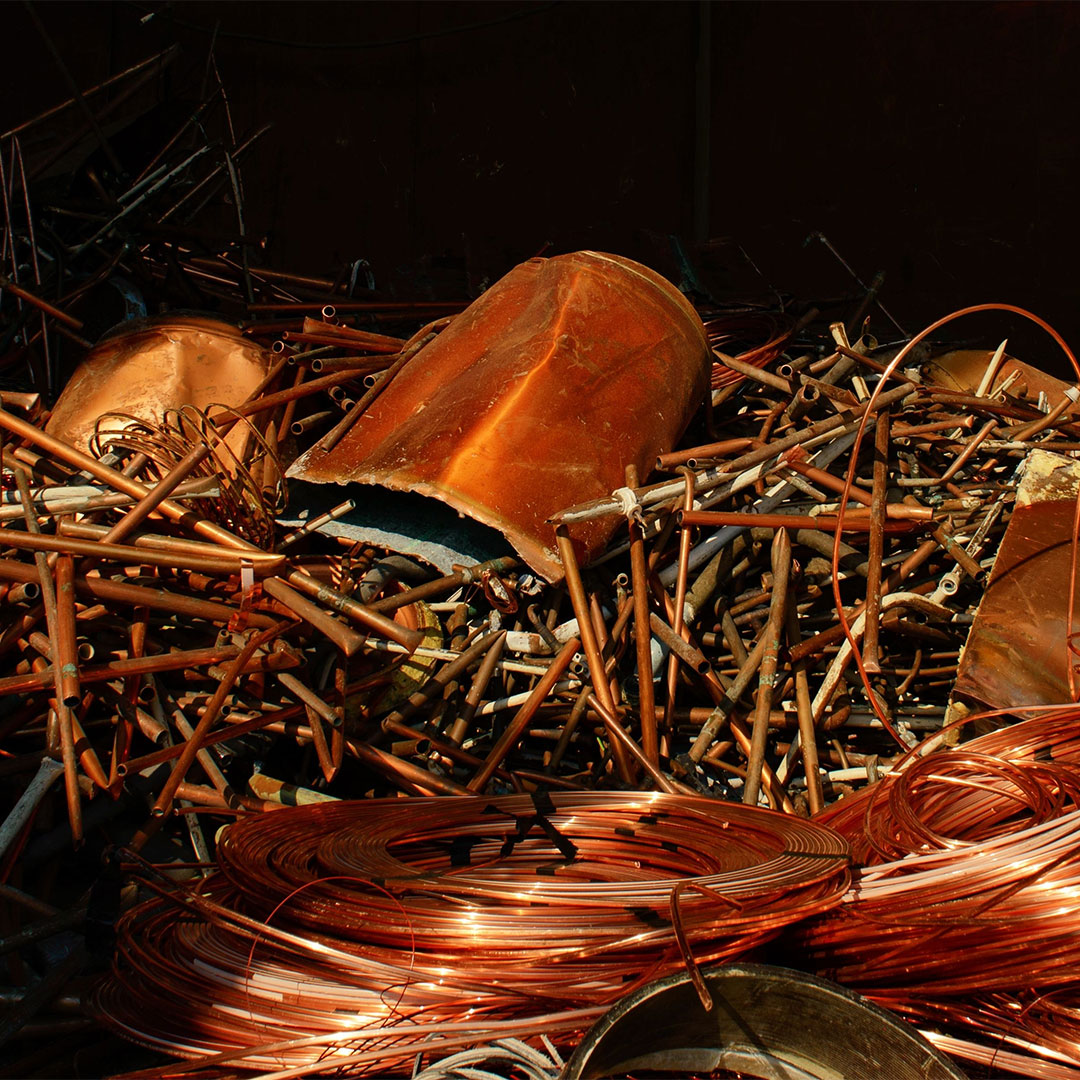
- Copper: Pipes, wires, roofing sheets, etc.
- Lead: Pipes, roofing sheets, cables, wheel weights, gutter/pipes, etc.
How do you identify non-ferrous scrap?
Try a simple magnet test, check for distinct colours and always compare how heavy it feels compared to its size. Here’s a full breakdown:
- The Magnet Test: Use a magnet to test whether the metal sticks or not. If it doesn’t, your scrap is non-ferrous.
- Assess the Colour: Look for distinct colours, e.g. copper is reddish-brown, brass is yellowish with a bright sheen and aluminium ranges from shiny silver to dull grey.
- Compare Weight to Size: Compare the weight relative to its size, e.g. aluminium is very lightweight and lead is quite heavy.
How valuable are non-ferrous metals?
Non-ferrous metals are highly valuable, driven by their many desirable qualities – including corrosion-resistance, low melting points and a lightweight nature. All of which makes them crucial for the manufacturing, construction and automotive industries.
When demand from these industries is high, prices increase. But if there is an oversupply of non-ferrous materials, and the demand drops, it may not be the best time to sell your scrap.
That’s why we base all of our scrap metal prices on the world centre for metal hedging, pricing and trading – the London Metal Exchange (LME). So you can rest assured you’ll always receive a competitive price, based on current market conditions.
Start spotting the hidden value in your scrap
As scrap piles up on-site, what looks like waste could be worth way more than you think! Make sure you keep your non-ferrous scrap to one side and wait for the right moment to sell it to a reliable scrap yard.
Ready to make a profit on your non-ferrous scrap? Visit our local scrap metal yard at M46 0RY today. Based in Atherton, we can also service the following areas:
- Astley
- Bolton
- Chorley
- Lancashire
- Leigh
- Manchester
- Preston
- Salford
- Tyldesley
- Westhoughton
- Wigan
- Worsley
Don’t forget to follow us on Facebook, Instagram and Twitter to keep up to date with our latest updates & industry news.
Non-Ferrous Scrap: FAQs
Which trade materials usually contain non-ferrous metals?
Trade materials containing hidden non-ferrous gems usually include:
- Plumbing Fixtures: Copper or brass pipes, valves & fittings.
- Roofing Sheets: Copper, lead or aluminium roofing sheets.
- Construction Materials: Aluminium window and door frames.
- Electrical Wiring: Copper wire or aluminium cable.
- Automotive Parts: Aluminium or titanium engine blocks, car frames, etc.
Can I mix non-ferrous and ferrous metals when taking them to the scrap yard?
No, we would highly recommend separating your ferrous and non-ferrous scrap before visiting us. Not only will sorting your scrap metal fetch you a higher price, but it also makes our merchants’ lives easier!
Clean, uncontaminated scrap metal is always worth more and the more organised you are, the less work we have to do, which also ups the final price.
How should I store my scrap to get the best price?
To get the best price for your non-ferrous scrap, you should sort it by metal type and store each of these in clean, dry containers.
Before storing, make sure you remove any non-metal attachments (e.g. plastic or rubber). Pure metals require less processing, making them more valuable to scrap metal buyers.
Tags: Builders Scrap Yard, Electrical Scrap Yard, scrap metal recycling, Scrap Metal Recycling For Trade, scrap metals
